
Microsoft and Researchers Command a Breakthrough in Hollow-Core Fiber Technology
A new era of ultra-fast, low-latency optical fiber communications is unfolding — and it could redefine AI, cloud, and telecom infrastructure.

In 2025, a breakthrough in hollow-core fiber technology promises a seismic shift in optical fiber data transmission. Researchers from the University of Southampton, backed by Microsoft, have developed a novel anti-resonant hollow-core fiber design that delivers a record 45% faster data transmission and achieves ultra-low loss optical fiber performance — under 0.1 dB/km at 1,550 nm (Phys.org).
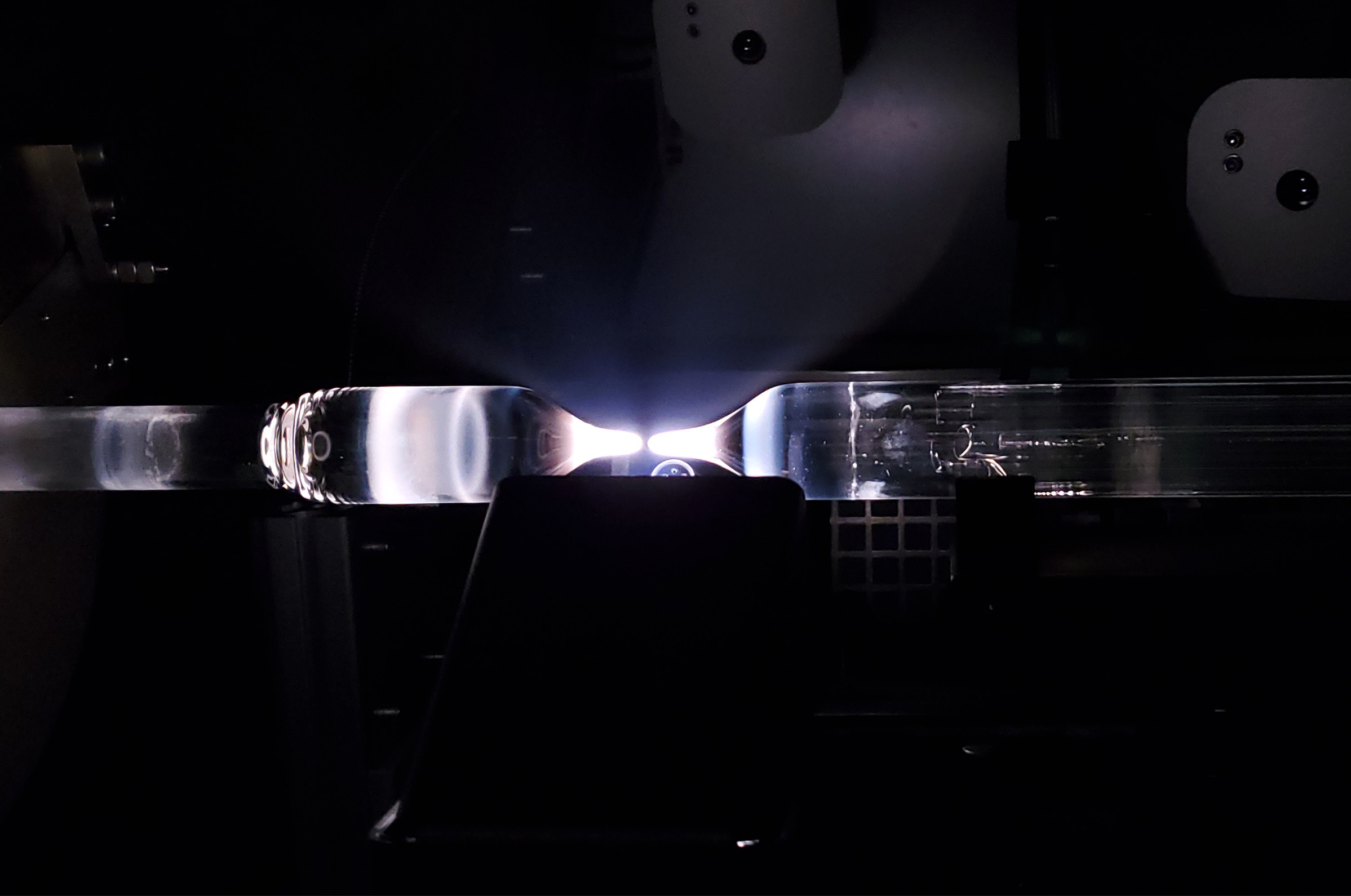
Let’s unpack this innovation, explore its implications, and understand how it fits into the future of network infrastructure, AI cloud acceleration, and telecom advances.
What Makes This an Optical Fiber Data Transmission Breakthrough?
Unprecedented Low Loss & Wide Spectral Range
This latest hollow-core fiber technology achieves a record low attenuation of 0.091 dB/km, compared to 0.14 dB/km found in traditional silica fibers (Phys.org). Even more notably, it maintains sub-0.2 dB/km loss across a staggering 66 THz bandwidth, spanning wavelengths from 700 nm to over 2,400 nm — opening possibilities for AI cloud infrastructure fiber acceleration, long-haul submarine optical cables, and high-power laser delivery (Phys.org).
Speed Through Air Instead of Glass
Traditional fibers use silica cores, which inherently slow light. Hollow-core fibers—built on anti-resonant hollow-core fiber design—guide light through air, enabling speeds nearly 50% faster than silica, translating into dramatically lower latency fiber optic cables (azure.microsoft.com, lightwaveonline.com).
Microsoft’s Strategic Investment: Lumenisity
Why Microsoft Bought a Hollow-Core Fiber Startup
In late 2022, Microsoft acquired Lumenisity, the UK spin-out behind CoreSmart hollow-core fiber, equipped with nested anti-resonant nodeless fiber (NANF) technology (Redmondmag, Capacity Media). Microsoft saw HCF as a key tool to enhance low-latency fiber optic cables in Azure and cloud infrastructure, targeting sectors like healthcare, financial services, and government (Redmondmag, Light Reading).
Real-World Trials & Hybrid Deployments
Comcast has piloted a 40 km hybrid network blending traditional single-mode fiber with HCF, achieving traffic rates between 10 Gbps and 400 Gbps, and reducing latency by up to 33% (corporate.comcast.com, Light Reading). These tests validate the promise of high-speed data transmission through fiber optics and their capabilities in real-world networks.
How Hollow-Core Fiber Advances Network Infrastructure
AI Cloud & Data Center Fiber Optic Technology
HCF is being integrated into cloud computing infrastructure, notably through Microsoft’s Azure (azure.microsoft.com). The ultralow-latency, high-bandwidth attributes are tailor-made for AI model training, inter-data-center links, and low-latency fiber optic internet future connectivity.
Submarine & Long-Distance Applications
Thanks to record-breaking low loss rates and large bandwidth capacity, hollow-core designs may enable long-distance submarine optical cables with fewer repeaters. This could transform 5G and 6G network fiber infrastructure and even quantum communication systems (laserfocusworld.com, arXiv).
Cost-Efficient Capacity Scaling
Studies show that deploying HCFs in just half of network links can deliver 2.1× more data capacity and 38% lower cost-per-terabit/ when compared to multiband parallel networks (opg.optica.org).
Hollow-Core vs. Photonic Bandgap & Solid-Core Fibers
Hollow-core fibers bear some similarity with photonic crystal fibers (PCFs) — both use microstructured designs. However, HCFs are typically air-guided, offering significantly lower latency and higher speed than photonic-bandgap fiber variants, which still rely on bandgap effects within solid cores (Wikipedia).
What's Next for Future Connectivity?
Pushing Limits: Lower Loss, Higher Spectrum
The current 0.091 dB/km performance may fall to 0.01 dB/km with improved manufacturing and gas-free cores, unlocked across vast wavelength ranges (Phys.org).
Anti-Resonant HCFs for Extreme Applications
AR-HCF designs are enabling unprecedented use cases, such as delivering 2 kW laser power over 2.45 km with 0.175 dB/km loss—critical for industrial, manufacturing, and advanced sensing applications (arXiv).
Short-Wavelength & Quantum Communications
Efforts in ultralow-loss HCFs for short-wavelength ranges (UV to visible) point to loss figures several orders of magnitude lower than silica-core fibers, paving the way for next-gen sensing and quantum transmission systems (arXiv).
Conclusion: Why This Matters
This optical fiber telecommunications advance represents a turning point. Not just an incremental improvement—but a fundamental rewrite of network design:
HCF offers AI cloud infrastructure, fiber acceleration, low-latency fiber connectivity, and vast capacity.
It will power next-generation fiber optic cables and support 5G/6G, submarine, and quantum networks.
For enterprises, the result is faster, more dependable links across AI, telemedicine, finance, defense, and more.
In essence, hollow-core fiber is redefining what's possible in the future of network infrastructure—ushering in a high-speed, low-latency world built on light in air, not glass.